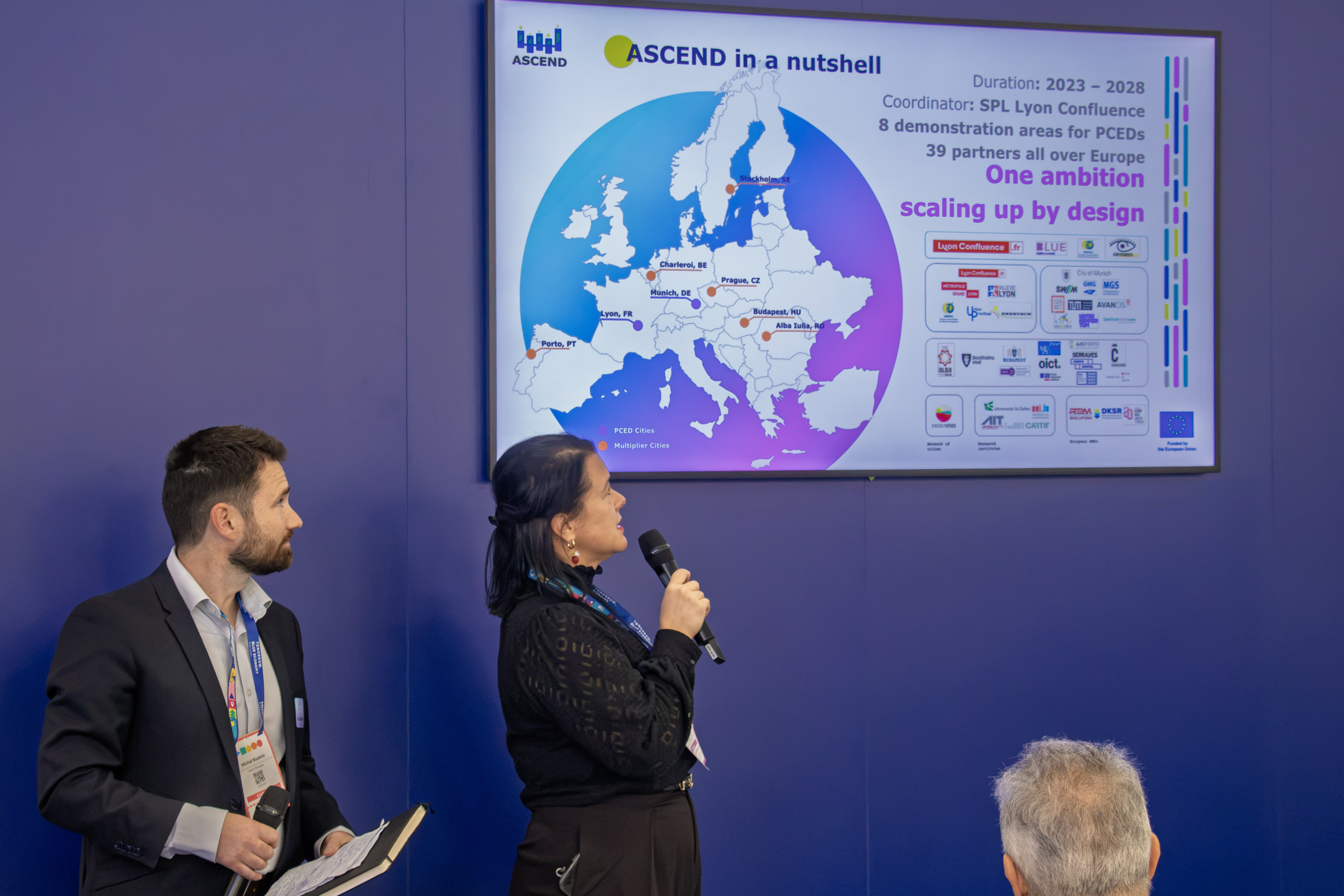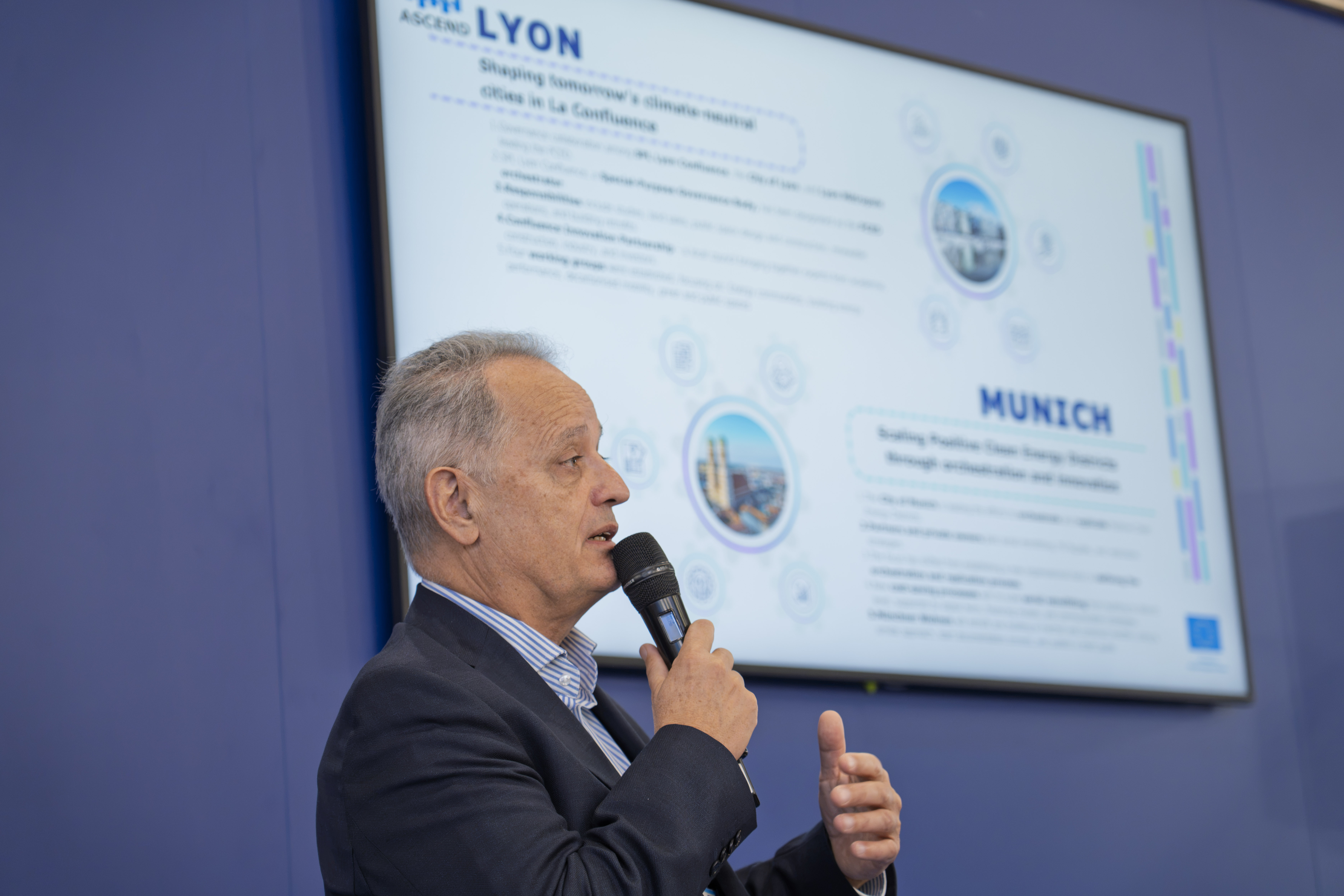
Munich presented its plans to transform the Harthof district, with around 3,300 mostly municipal rental apartments, into a template for 100 structurally similar districts by 2035. How a city could move from one district to a hundred was the central question addressed by ASCEND cities and experts on 4 November at the Smart City Expo World Congress 2026 in Barcelona.
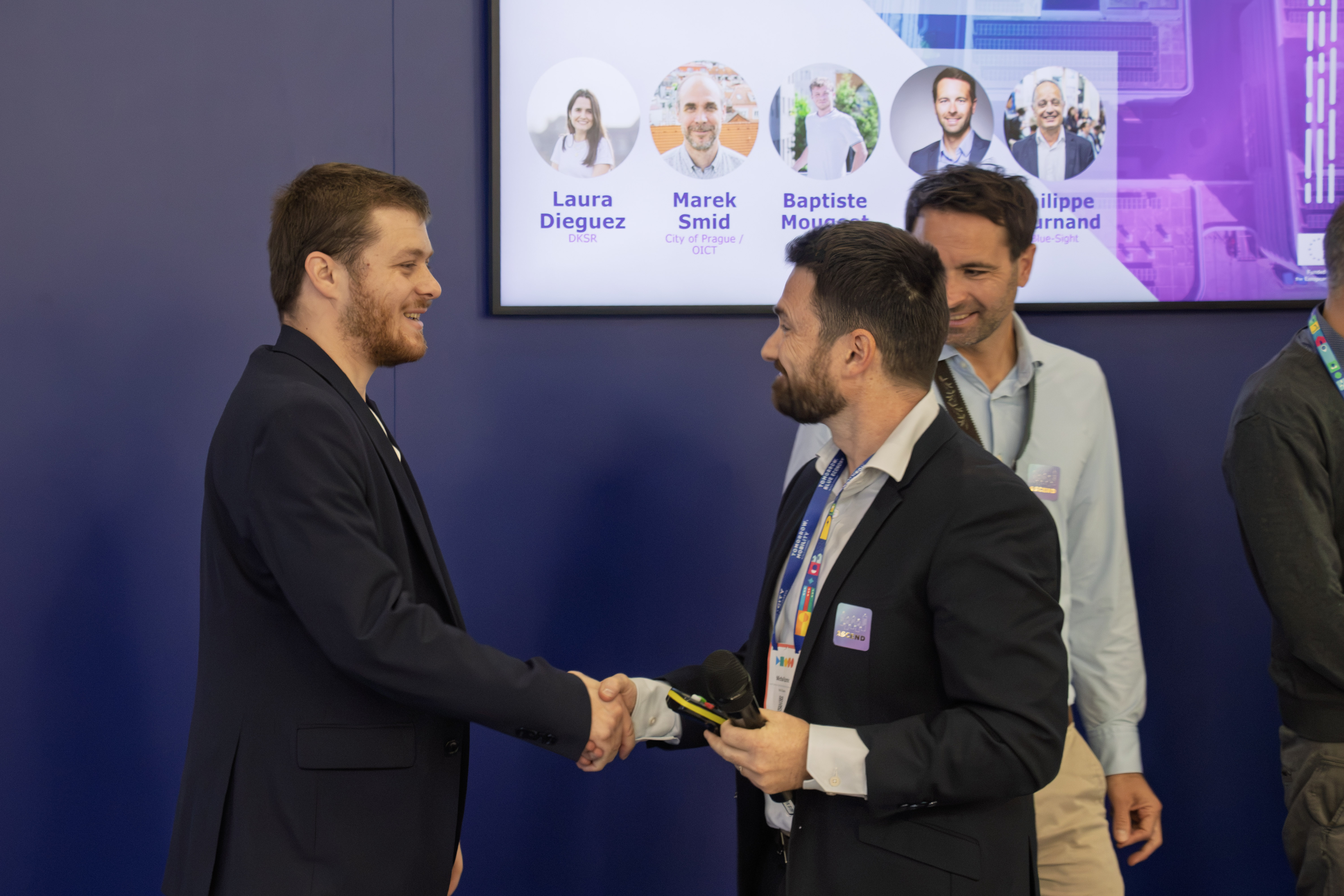
The panel took place from 10:00 to 11:00 at the European Commission’s EU for Resilient Green Cities Pavilion (Hall 2, Stand D121). It brought together representatives from Munich, Lyon and Prague with ASCEND partners working on replication, financing and digital tools.
Positive Clean Energy Districts (PCEDs) have demonstrated that climate neutrality can be delivered at neighbourhood level. The more difficult task discussed during the session was replication: transferring a proven model to other districts with the necessary organisational structures, tools and financing.
Lyon and Prague also presented their approaches to scaling up. In Lyon, the model developed at La Confluence was being extended to the district’s southern section, where 55% of housing was planned to be social or affordable. In Prague, lessons from ASCEND were being integrated into the design of approximately 550 new municipal apartments in Dolní Počernice.
The panel addressed four key questions:
- Digital tools: How could Prague and other ASCEND cities use AI and digital twins to plan and manage districts, and which tools were most valuable for scaling up?
- Urban orchestration: Munich managed its mission within the city administration, while Lyon entrusted delivery to a dedicated Special Purpose Vehicle (SPV). The discussion examined the advantages and limitations of each governance model.
- Replication: With Europe committed to achieving 100 climate-neutral cities by 2030, the panel explored the organisational, regulatory and practical conditions needed to move beyond individual pilot projects.
- Financing: The speakers discussed how Munich, Prague and Budapest could address the gap between capped rents in municipal housing and the costs of deep refurbishment, as well as how future district transformations could be financed.
Speakers:
- Baptiste Mougeot, SPL Lyon Confluence
- Dr. Stefan Synek, City of Munich
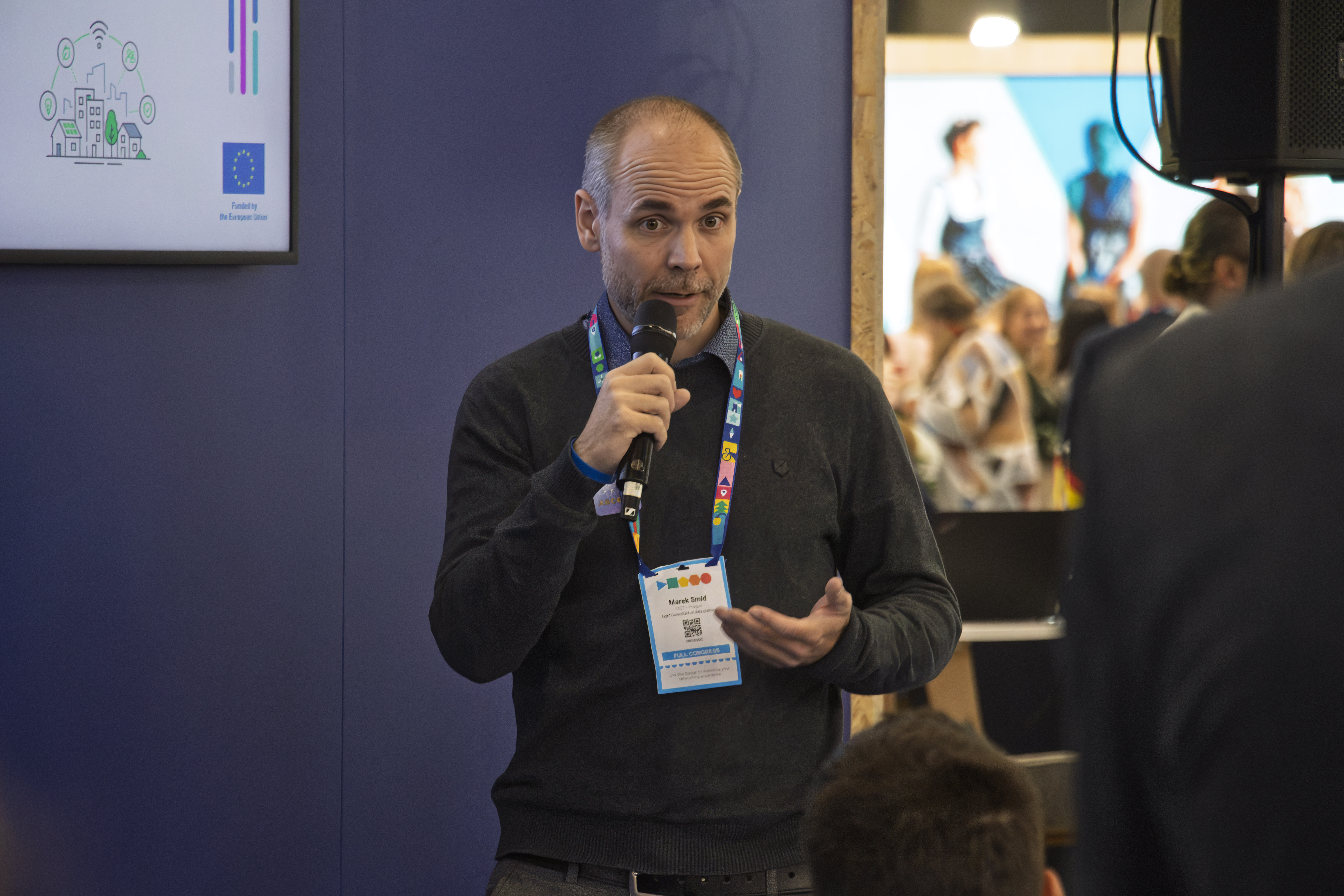
- Marek Šmíd, City of Prague/OICT
- Michal Kuzmič, Czech Technical University in Prague (ČVUT)
- Philippe Fournand, BlueSight
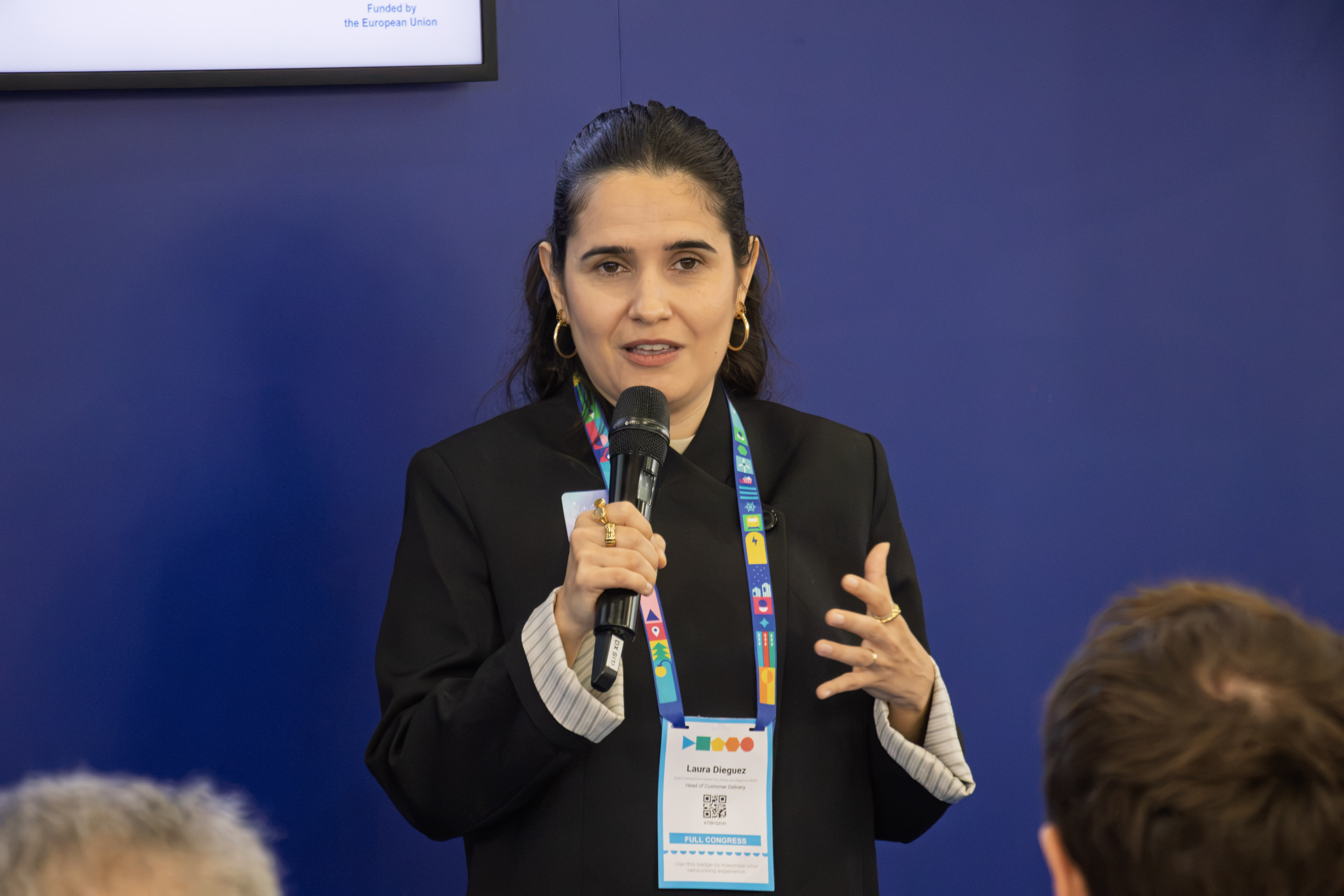
- Laura Dieguez, DKSR
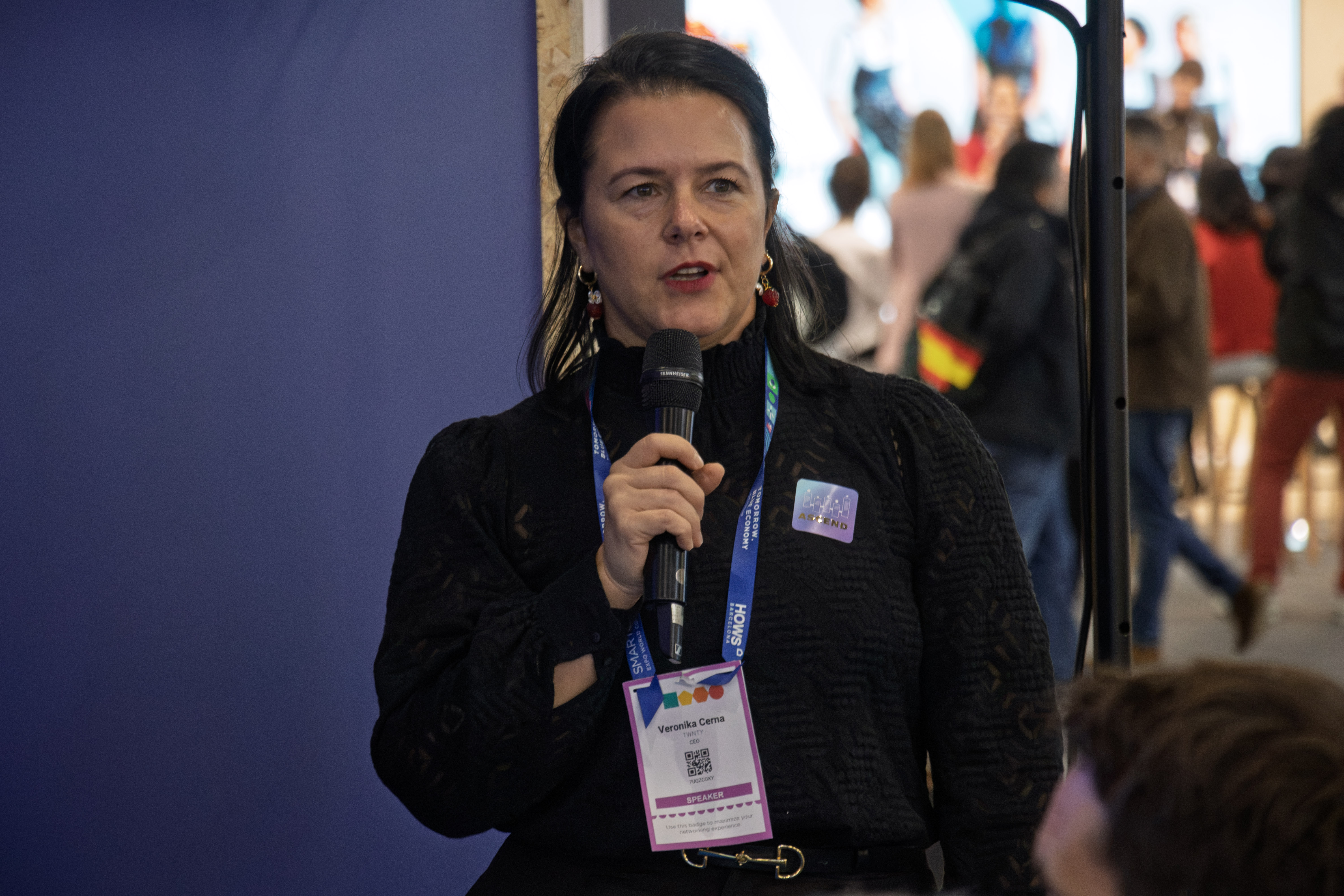
- Moderator: Veronika Cerna, TWNTY
The session opened with a live audience poll exploring the main obstacles to replicating successful district projects. It concluded with each speaker identifying one key condition for successful replication, providing a basis for further discussion on how cities could move from individual pilots towards systematic implementation.
Following the panel, speakers were available at the ASCEND station on the European Commission stand for one-to-one conversations with participants.